"Required reading" for today's smart writer.

"Required reading" for today's smart writer.
Information & inspiration to hone your craft and increase your cash...Since 2009

Wednesday, September 27, 2017

A Review of William Kenower's Fearless Writing


FORMIDABLE WRITING:
A REVIEW OF WILLIAM KENOWER'S FEARLESS WRITING

By Noelle Sterne


Introduction

I have to admit it: I am in love with Bill Kenower’s blogs on Author Magazine. He posts a new one every several days, and each is thoughtful, powerful, insightful, enlightening, uplifting, and often funny. He pushes the limits of what it means to be a writer-author and is admirably forthright about his own struggles.

Now he has published a book that incorporates his wisdom and honesty. The title intrigued me immediately: Fearless Writing. As I do with many books, I started reading the book before bed. Big mistake. It pulled me in for another hour, from one chapter to the next. Who ever heard of a self-help page-turner?
 
Overview

This is truly a unique writing craft book—and much more. It’s a writing craft and life book. My review here is uncharacteristically long because you should know about the treasures the book contains.

Kenower’s is not a typical how-to book on writing but a how-to on attitude, outlook, and perspective, all of which correct and inspire in us courage, confidence, persistence, and truth to our vision. More than a shot in the writing arm, it’s a shot in the psyche.

He covers the gamut of the writing life, from creating to revising to rejection to writing groups to marketing to our fears of failure. But his approach is unique. The foundation, unlike so many other books on writing, is not self-discipline, fear of regrets, wasted talent, or the usual writing-is-hard-complaining-writhing-bleeding-incessant struggle of so many (oxymoronic) writing self-help books. Rather, Kenower’s premise for our writing is that we should feel good and love ourselves writing(!) Writing, he maintains, is supposed to feel good.

I warn you. The reading is not facile. To get the most—or anything—you must stop, think, digest, and ask how much of Kenower’s insights and pointed observations apply to you. The exercises at the end of each chapter help you take in and practice the meat of the chapter. And they are not all traditional prompts, by any means. Examples: Two characters you create talking about their worst and best days of writing (p. 11). Your rules for what you believe is a good story, poem, or other work, with required illustrations (p. 61). Instructions for a guided meditation (and no writing, p. 114). A technique for “waiting for better ideas” after a fight or low feelings, and then for writing (p. 146).


On Writing

Kenower views our writing in an intimate, inextricable relationship with the whole of each of us. He objectifies our writing for us to understand what it is and how it’s behaving so we can choose and act. Write this or that. Wallow or rejoice. Shut out the world and write what’s in your gut or write to the market and try to please everyone.

The specific advice on writing is equally inspired. Don’t worry about the language but “Feel first; write second” (p. 30). Your reader wants to know what it feels like—whatever you’re describing or whatever quandary you’ve put your protagonist in. Especially when you’re stuck, “stop thinking about language and . . . see or feel what you’re describing” (p.177). Remember that anything in the so-called “real” world had to exist first in someone’s mind and imagination (p. 214)—and it certainly could be yours.

Too, we must throw out what Kenower calls “the mother of all writer fears.” This is our often unquestioned assumption: “What other people think of what I write is more important than what I think” (p. 98). Instead, we should strive to feel our creative power and purpose in writing and “immerse . . . fully” (p. 186) in what we have chosen to write. Our only job as writers “is to write the story [or poem or essay or novel] we most want to write in the way we most want to write it and then let our audience find it” (pp. 148-149). This is the theme of the book.

The Language

Kenower is a supreme wordsmith, and his phrasing is to be much admired. He points out “our nearsighted desire” to write what we think we should and to our refusal to yield to the coveted “Flow,” in which all goes perfectly (p. 14). With a story that doesn’t work, he finds himself “leaning against the headwind of my disinterest” (p. 33). And sometimes he succumbs to “the hamster wheel of my [negative] thoughts” (p. 214).

In that wonderful “Flow,” he exchanges the first exhilaration of a new piece for the “patient pleasure of discovery” (p. 106). In choosing to write what we are genuinely curious about, we “rid[e] the momentum of thought that ensues” (p. 135). Through all of this, we must recognize and accept our moments—and hours—of “creative discomfort” the feeling that guides what we really should write (p. 90). And many more, all of which I envied.

The Undergirding of Spirituality

As in his blogs, Kenower shows great courage and audacity in his unabashed spirituality. We are not running out of time. We are basically okay; everything is okay. Contrary to our seemingly ubiquitous inner judge, he asserts, “Humans are always complete . . . “(p. 105). With these indomitable declarations and assumptions, he doesn’t rationalize, justify, apologize, defend, alibi, or explain. A lesson all its own.

Writing, he says, “is not thinking; it is listening” (p. 108). This truth goes with the advice to heed our internal personal guidance system. He explains and extols the guidance system in each of us (yes, you too) and admits to “the agony of working without” it (p. 83). “All people, regardless of whether they’re writers, have an unerring guidance system. It’s how we know what we should do, whom we should marry . . .” (p. 91). As we ask and listen, we are instructed what to do and where to go in our work.

Once I learned this lesson, instead of fretting or yielding to previously hugged despair/despondency/depression, and flinging into the tub of ice cream, I found the guidance system invaluable and infallible. When I am stuck in a plot, trying to figure out a sequence, utterly blank at what piece to pick up or where to go next, I ask and listen. The answer always comes.

But Kenower doesn’t leave us hanging in the amorphous Universe; he always applies his teachings (and learnings) to writing. He reminds us of the poles we often feel hurled between: We love our writing—or fear we won’t be good enough. We stay, with love, absorbed in our current project—or worry that no one will like it and will condemn or ridicule it, including ourselves.
In remedy, Kenower always returns to the cardinal rudder idea: write what you love, what you’re curious about, what you’re interested in. “Writing is supposed to feel good” (p. 35). Remembering these “rules” is how you kick out fear and worry about the value of your writing—and yourself. You become engrossed in and enthralled by your overriding fascination with the work itself and your mysterious, magnificent creation of it.
The Style

Kenower’s style is engaging, personal, sometimes juicy. He is friendly but not oversimplified, highly intelligent but not ponderous. He talks easily about his personal life—cleaning the house with his wife on Sundays, picking up bagels for brunch, telling stories about his two sons. Although intimate, his tales are not cloying, self-serving, or sensational—they always have a point, and he brings them back to our writing. For example, when his older son Max was two, Dad pointed to a favorite toy truck. Max focused on and stared at the end of the pointing finger, not the truck. Max taught Kenower, and he teaches us: Our writing is more effective when we point and let the reader conclude. That is, he advocates the well-hammered saw, “Show, don’t tell” but advises us not to show everything.

He is often authoritative, and sometimes didactic, but never offensively so. He’s occasionally pedantic but not self-importantly. Rather, Kenower’s his tone results from his unshakable conviction and is aimed only at helping fellow sufferers. Throughout, he is always human, approachable, and one of us.

The Format

The book has some attractive physical features. It balances nicely in the hand, a traditional 6 x 9 paperback format. It’s good for reading upright, reclining, or flat in bed (my favorite). I would have wished, though, for subheads within each chapter to break up the rather small print. The book is printed on cream-colored paper that does not highlight the print itself. You can look at the format as a test of your desire to keep going and taking in his wisdom. My quibbles here, though, aren’t from Kenower’s decisions but the publisher’s, likely for economy.

The Teaching

Kenower, a closet iconoclast, eschews the usual advice to writers: xxx words/pages a day, set the timer for xx minutes, completing xxx prompts. Yet the craft aspects are very helpful. He emphasizes the “Show, don’t tell” rule. He reviews and explains the three story arcs (I only knew of one!): the physical, emotional, and intentional. They are very helpful to me now as I wrestle (lovingly) with the present novel, especially the intentional arc.

The arcs all require some prethought and articulation. I used to rail, fight against, rebel against, refuse to entertain, object to, and stonewall all such outlines and prethinking. Ah, I thought, I only need the Muse. But now, with Kenower’s direction, I am more conscious. The Muse still alights much of the time but is now tamed and made to sit down as I look more closely at what is down on paper. And I ask myself his cardinal questions: What do/did I most want to say? Have I said it?

Kenower is also sensitive to writers’ angst and keeps returning to the major message. Throughout, and especially to conquer staleness and despair, he asks us to ask ourselves, What do I want to share? Why? What am I most curious about? What do I really want to write about? What am I in love with?

As we respond, our answers fuel us, keep us going, remind us why we started this thing. Whatever the trends, fads, current lucrative markets, practical advice about what sells from well-meaning mentors and relatives, we need to keep coming back to these questions and our answers.

So, he says, write the story you most want to write. Have the confidence to follow your desires. Self-doubt is the “vampire” of unity. Again, writing is supposed to feel good (p. 37).

If we write for other reasons primarily—“the world’s full arsenal of preference” (p. 154), like money, recognition, approbation, publication, awards, we will feel unsatisfied and discontented, and the specter of self-betrayal will lurk. That arsenal of preferences is not inherently bad. But, like a holiday sparkler, Kenower reminds us, the delight fizzles after a very few seconds.

When we write what we love, are interested in, and curious about, we complete, finish, even publish our work. We feel a great a sense of satisfaction, self-fulfillment, and integrity: I’ve done what I was supposed to do. And we go on to the next.

The Application

As experienced a writer as I am, reading Kenower reminded me: Don’t force it, stop trying to dazzle. Relax, allow, know I am the receptacle, open, trust. The ideas and right words and evolution of the piece will come.

This principle was proved to me (again) recently when I was asked to contribute a major essay to a special issue of an online literary magazine. The editor and I discussed and agreed on a heady cluster of inspiring ideas. Oh boy, I thought, am I important! They want something great from me.

Well, when the time came to write the thing, my brain was brick. The Flow had left the building. I tossed and turned in my desk chair and pecked out a few words. Got up, flung around, wished it were already time for night-escape TV. I was making the cardinal mistake: caring too much what others thought or might think. And it hogtied me.

Finally, following Kenower, I asked myself: What am I curious about on this topic? What do I really think, feel, see? What do I want to share? His words floated in: “Writing is not thinking; it’s listening” (p. 108). That broke it. Answers to those questions floated in, and, blissfully in the Flow, I typed so fast I could. (And the editor was very pleased with the piece.)


A Niggling Criticism

With so much to praise, almost embarrassed I point out a couple of flaws. My editor’s eye couldn’t help but notice some repetition, even exact phrases, for example when Kenower talks about his son diagnosed on the autistic spectrum. And sometimes he repeats too often the dictum of writing what you love and everyone else be damned. But such slips are easily forgiven, couched as they are in his wisdom and passion for writing.


The Theme

Kenower restates his theme in many ways: not only, first, to write what we love, but also and most importantly, to recognize our power. The book deals less with craft, as he says, and more with our self-confidence as writers. The motto of Author Magazine, of which he is founder, editor, and principal blogger, also proclaims, We are the authors of our lives (pp. l43-145). Despite rejections and disappointments, we determine our successes. Part of our power is to “write fearlessly and with complete confidence” (p. 208). Our success is a choice—to trust ourselves and continually shore up our self-confidence (p. 208).

After all, the world “is a perfect mirror for what we believe” (p. 208). Seeing is not believing, but rather the opposite—believing leads to seeing. If we tell ourselves stories of failure, in writing and life, they “gain momentum” and we somehow feel we must prove them true (p. 137). As we doubt, the evidence appears; as we build confidence in ourselves, the evidence appears. Our job is to surrender to our writing (pp. 208-212).

Radically, Kenower suggests, very much akin to the advice of athletes and others, to “practice feeling success” (p. 206). Fearless writing, he says, “is about understanding your creative power” (p. 102) and acting on it.

As you might have guessed, I recommend Fearless Writing as a superb addition to your writing library. When you need a writing vitamin, flip it open at apparent random, à la I Ching, and you’ll hit on just the right passage for what’s ailing you. When you feel the need for steady doses, read a little at a time daily and you will begin to soak in (and act on) the messages.
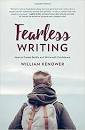


In Fearless Writing, Kenower enables us to live more easily with our writing. His vision and conviction teach us to perceive our lives and writing as the authors and to keep writing with courage, confidence, and love.

Images: Pixabay.com

Thursday, September 21, 2017

6 Tips for Designing a Home Office You'll Love!


SUCCESS PRINCIPLES 


Home offices are all the rage these days. And with good reason: in this Internet age, with changing dynamics, more professionals are choosing positions that allow flexibility, convenience, the opportunity to design their own “perks,” and the option to work from home.

According to the Freelancer’s Union, “53 million U.S. workers are now freelancing” from the comforts of their own space.

Working from home affords many benefits for today’s workers--- less stress, less travel time, fewer travel-related expenses, and more quality time spent with family members.


A HOME OFFICE CAN ENHANCE YOUR PERFORMANCE

To make the most of working from home, a dedicated space is important.
It can increase productivity, allow for greater organization, accommodate clients, and provide an environment that contributes to greater success. An added bonus here is that a home office has certain tax benefits.

So, if you’re in the market for one, or have been setting up shop at your local Starbucks or the nearest coffeehouse, it’s time for a change.

WITH THIS IN MIND, HERE ARE 6 TIMELY TIPS TO CREATING A HOME OFFICE YOU’LL LOVE:


1. CHOOSE THE "WRITE" SET-UP

A home office can be as small as a corner attic space or as big as a master bedroom.
It all depends upon your spacial considerations, your business needs, and your personal preferences. For optimal results, choose a room that offers a good degree of privacy, minimal noise, and space for basic equipment like a copier, fax machine, desk and chair.

2. CAPTURE THE RIGHT COLORS

Did you know that certain colors have a psychological affect on our thoughts and moods?
For example, green is associated with growth, wealth and vitality. Red is associated with energy. White depicts faith and purity. Get the picture here? Choose a color that resonates with your personality and reflects an image you’d like to portray.

 
JEN'S HOME OFFICE
3. GET PERSONAL

Mix business with pleasure. Combine quality furniture with bold, unique artwork, fun lamps, personal trinkets, awards of achievement, pretty framed photos of your family or favorite places you’ve traveled.

If you’re an avid reader, books provide a nice “scholarly” touch as well.

4. CONSIDER ADDING PLANTS

MY PLANTS

Bringing a bit of nature indoors adds warmth to your décor. Plants also improve the air quality in your home. Choose a low maintenance variety like Spider Plants and Lucky Bamboo.

5. ENHANCE IT WITH SOME FENG SHUI PRINCIPLES

Feng Shui is the ancient Chinese practice of aligning your home’s design with the correct placement of furniture to achieve proper balance and energy flow.

Read more about the various techniques and practices here:

http://www.yourchineseastrology.com/feng-shui/career/


JEN'S HOME OFFICE 2


JEN'S HOME OFFICE 3


JEN'S HOME OFFICE 4
JEN'S HOME OFFICE 5


6. EXPERIMENT

Don’t be intimidated by the process. Take the time to try on “different looks” before you arrive at a final decision. Take pictures at various stages, take note, reflect and assess. What colors work well together? Does your new office look crowded? Can you find things easily? Does the look inspire you? Is it suitable for clients? Comfortable?
Is it a positive reflection of your personal identity?
These are things to consider.


JEN'S HOME OFFICE 6


Follow these timely tips to create a home office that “works” and that’s attractive, functional and uniquely you.
Because “there’s no place like home.”

Unless otherwise noted...
Image credits: Pixabay.com

Tuesday, September 19, 2017

Why Should Writers Blog Today? Points to Consider


Guest Post by Cynthia Clampitt
 
Much of the discussion about blogs these days is about monetizing them. Pity—because monetizing a blog is not only difficult, it’s also (somewhat) unlikely. When people run into this reality, many give up on the idea of blogging. But money is not the only, or even the main reason to blog. Even without creating an income stream, blogs have virtue and value.

First and foremost for many is that key element of writing success: building a platform. If you have a good blog, people will become interested in your writing and may start “following” you. Of course, this means you need to put some serious thought into your blog. It should reflect the quality of the writing you want to promote. Plus you need to decide what your blog will include: all your random thoughts, information on the writers life, your travels and research, your personal insights or struggles. The goal and focus of the blog should be defined on the About page, to let people know what they can expect from you.

Word to the wise: don’t make it so narrow you can’t keep the blog going long term, but make it clear and diverse enough that it helps your readers.

ADDITIONAL POINTERS…
Make the most of the promotional opportunities of the blog. The About page, of course, can include a link to a website, an Amazon listing, your LinkedIn profile, or other places that make it clear you are a working writer. (I see so many “About” pages where the sample text “this is an example of an About page” is left in place. You definitely shouldn’t do that.)

Be aware that you can add other pages to inform and engage readers. For example, a page for awards and/or reviews of your writing.

DISCIPLINE IS CRUCIAL…
Possibly more important than promotion, though rarely mentioned, is discipline. If you are going to succeed as a writer, you have to write pretty consistently. Sure, you’ll have days off, but if there are months and years off, you’re not going to succeed. A blog gives you a place to “stay in shape” as a writer. You have a reason to write even when you don’t have an assignment. (Another bonus I’ve found is that, when you have to cut a passage from something you’ve written, and you simply love that passage, you can put it on the blog. You can keep your word count to what has been assigned but still have an outlet for those extra details or delightful vignettes.)

THE BENEFIT OF HAVING YOUR OWN BLOG…
A blog gives people a place to connect with you. There are, of course, the “like” buttons and comment sections. While a lot of comments tend toward “nice post,” sometimes important information is included. (I’ve heard from ad agencies and schools in Australia that wanted to use my photos, colleges asking if students reading my book could contact me, and even the National Library of Australia, requesting permission to archive my Waltzing Australia blog.)
 
PLANNING FOR SUCCESS…
“Those who fail to plan, plan to fail.”

A bit of planning is involved. Whenever possible, have a few posts planned out in advance, so if you get busy, you still have something to put out there. But don’t panic about it. You don’t have to post every day, unless you have a topic that requires daily updates. Once you get followers, they will be notified when you post something. And most host sites work hard at promoting every post of their users. (I use WordPress, and they are very good about making blog posts visible.)

Also, link whatever you can to your blog. Goodreads, Amazon, and LinkedIn all offer the option of having your posts appear on your profiles, but even sites that won’t show your posts still generally allow you to post the URL for your blog.

TO WRAP THINGS UP HERE…
Visit blogs that are related to what you write, and leave comments. That leads people back to your blog. Because building platform only happens if you work at it one layer at a time.


Bio:  Cynthia Clampitt is a writer, speaker, traveler, and food historian. She is the author of Midwest Maize: How Corn Shaped the U.S. Heartland and Waltzing Australia. Midwest Maize and Waltzing Australia also happen to be the names of two of her three blogs (the third is The World’s Fare, which covers culture, food, history, and travel to places other than Australia and the Midwest). She has been blogging for more than ten years.


Why do you blog? What aspect do you consider to be a benefit to your writing career?


Image credit: Pixabay.com


Friday, September 15, 2017

Food 4 Thought Friday-A New Monthly Feature!


Greetings, Pen & Prosper Readers,

In my ongoing efforts to inspire, inform and entertain, I have opted to add a new monthly feature here. Food 4 Thought Friday will be an array of different opinions, essays, motivational quotes, quips by my mom and poetic pieces that I hope will enhance your reading experience, inspire you to view things from a different perspective, or simply make you smile in the midst of life's madness (especially the writing life).
As many of you are aware, I have been blogging at Pen & Prosper for over eight years now. And as with all "relationships" it's important to add a little variety to keep things interesting.
True?

Some posts may be long-form; others may be short and sweet.
It all depends on my mood and the topic being covered.
I also invite you to share your own commentary pieces and "thoughts" to add to the mix here.
I'm sure you'll agree that this is how we learn and grow as creative artists and as people in general.

Just a few guidelines here, before we get started.


  • This is in its "testing" phase. Your comments, (or lack thereof) will determine if this new feature continues. So, if you like it, be sure to leave a comment to keep it going.
  • Let's agree to disagree in a polite, professional manner. Please show the respect you would like to receive. Remember, we don't have to be like-minded to like each other. :-)
Now, cop a squat, grab your favorite brew, and let's get on to Friday's thoughts...shall we?

LITERARY ELITISM?

Let’s face it: bloggers are considered lightweights in the literary world: “children of a lesser God.”
We often garner the same response as “domestic engineers” when people in social gatherings ask us what we do.

In fact, there’s a certain smugness and subtle disregard that occurs whenever I discuss my blog work and associated awards even amongst writing peers.


It’s not much different than when our kid comes home with the “opus” created in his art class at school. We smile and pat him on the head for not coloring outside the lines, and then send him off to play.
The prevailing mindset that blogging is not “serious writing” is even echoed when suggesting to novelists, authors and columnists who are friends and associates of mine, to hop on the blogging bandwagon and start their own site. They usually express how they are much too busy to devote time to something they perceive to be a form of "trivial pursuit". To each his own.

But, don’t get it twisted. Blogging may not require a college degree or formal training to break into; and it’s definitely not rocket science. Still it’s a genre of writing that merits respect-- no different than screenwriting, journalism, poetry or plays.

Consider the following stats and studies:
  • There are over 152,000,000 blogs on the Internet (and counting).
  • Bloggers are considered the third most trustworthy source of information, behind friends and family, according to an independent
survey of UK consumers commissioned by affiliate network, affilinet.
  • 61% of U.S. online consumers have made a purchase based on recommendations from a blog.
(Source: BlogHer)

Gone are the days when blogs are primarily used as a forum to vent about bad bosses or showcase poorly written work that can‘t make the cut elsewhere. This “art form” has resulted in major book deals by traditional publishers, syndicated columns, and an income source for those who do it well. For example, Yuwanda Black, a blogger over at Inkwell Editorial, was approached in 2016 by Adams Media to pen a book titled “The Ultimate Freelancer’s Guide.”
She states on her blog that she never even pitched or queried them. They discovered her randomly through her blog and information products, (and the rest as they say is history.)

Though many are called, few are chosen. Blogging is extremely competitive and requires a strategic approach to stand out and stay relevant. Not everyone can pull it off or do it well. It’s the reason that so many sites actually end up folding within the first few years. It’s much harder than it appears.

Blogging requires discipline, commitment, creativity, time management, effective communication, technical skills and consistency.

That’s a tall order.

So, if you’re a blogger reading this, hold your head up high.
Your work may not lead to a cure for Cancer, or result in world domination.
You may not even have “the moves like Jagger.”

But your work inspires, informs, empowers and educates the masses.
And that’s not too shabby either.


Thoughts? Agree or disagree here?


Image credit: Diamond--Pixabay.com

Monday, September 11, 2017

Ask the Expert-With Ghostwriter Dawn Josephson

Meet Dawn Josephson.
She's a ghostwriter and author who has shared some useful insider's tips and strategies on this very lucrative field for Pen & Prosper readers today, as part of my ongoing "Ask the Expert" series.
Please make her feel welcome with your questions and comments.
As always, thanks for your time and readership.
 
Q. Can you tell readers a little about who you are and your background?

I’ve been a freelance ghostwriter and editor since 1998. I have been in the writing and publishing industry since 1993. But I have been writing since childhood and got my first piece published in the New York Newsday when I was just 8 years old (I won’t give an exact year, but let’s just say it was back in an era when Carter was President).

I worked for book and magazine publishers prior to freelancing. I started ghostwriting quite by accident. My boss at the magazine I worked for wanted to write a book. Since I was the magazine’s Editor-in-Chief, he asked if I would “help” him. Little did I know at the time that “help” meant, “write it for me.” But that’s what happened. It was my first ghostwriting project.

While my boss was promoting the book, a PR rep I worked with and who saw the book asked me (in private) if he really wrote the book by himself or if I had a hand in it. I told her what had happened since there was no confidentially agreement in place. She said, “Great! I have some clients who need books and articles ghostwritten. Can you help?”
And so the journey began.
 
Q. What is your writing routine? Do you write every day?

I write most days, but not every day. A lot depends on my workload. I try to take at least two days off per week so I can recharge.

As for a routine, I’m a bit of an ADD writer. I don’t sit for long chunks of time and write. I need frequent breaks. So I may write a few pages and then go for a walk. Write a few more pages and then break to fold some laundry. I write better with frequent breaks.

It’s funny because 15-20 years ago I used to be one of those writers who had to write in complete silence and could not be interrupted for anything. I’d write all day without stopping. But as I’ve gotten older, my ways have changed. I’ve always viewed change as a good thing though.


Q. I see you’ve been ghostwriting since 1998. How has the publishing landscape changed in the evolving years?

Oh my! Where do I start???? So much has changed. I’ve been ghostwriting since 1998 but in the publishing industry since 1993. When I first started writing and ghostwriting, email was in its infancy. People sent me manuscripts via floppy disk. Revisions were often faxed. Looking back, it’s amazing we got anything done at all.

Self-publishing was a dirty word you said in private. These days it’s a thriving industry with high quality products. Talk about a night and day difference!

While publishing something has gotten easier, gaining attention for your work has not. There is so much more competition for books now that many great titles never get discovered. Today, marketing your book is more important than the actual publishing process. I’ve seen too many wonderful books never get the readership they deserve simply because of poor book marketing.
 
Q. Since many ghostwriting jobs are not published on traditional job boards, can you share a few tips on how you garner clients?

To secure ghostwriting gigs, you need to find your niche and immerse yourself in that. This isn’t a profession where you can be successful scanning job boards. You need face-to-face networking. People need to trust you with their ideas. They need to feel comfortable paying you a large sum of money for your work. In many respects, ghostwriting for someone is like a marriage. It must be a good fit between the client and the ghostwriter. The only way to nurture that relationship and ensure you will have a successful project is to really get to know your clients. But realize that it goes beyond a single project. When you have a successful relationship with someone, they refer you to others. And that’s where the gold is!

My niche is professional speakers. When I was developing, cultivating, and nurturing my niche, I was an active member of the National Speakers Association (NSA). I held leadership positions in the NSA as the Writers and Publishers PEG (Professional Expert Group) Chairperson for several years. I went to all the meetings, hosted monthly teleseminars, did the group’s newsletter, etc. I traveled around the country and spoke at regional NSA meetings. I sponsored meetings. I advertised in publications my niche market read. It was essentially another job, but it got me incredible exposure in my niche.

Today, I am so established in my niche that I no longer have to do those things. All my business now comes from word-of-mouth, and I have no shortage of work. Getting to this point did not happen overnight. It takes hard work and dedication. But it will happen if you stick with it.
 
 
Q. What are some important qualities one must have to be a good ghost writer?

You need to really listen to your clients—not just for their information and ideas, but also to their style. Remember, as a ghostwriter, whatever you’re writing is not yours. It can’t have your voice. You must be able to mimic your client’s voice. This is easier said than done.

You also must have a small ego. This isn’t a profession for someone who wants fame and to be in the limelight. Some clients may not want others to know they used a ghostwriter, so it’s common that no one but you and your client know of your participation in a given work. You must be okay with that.

Finally, you must be tight-lipped and trustworthy. Depending on your clients, you will be hearing information that no one else has ever heard before. You can’t blab about it before the book comes out (and often even after the book comes out—you can’t admit your involvement with it).
 
Q. I see you’ve also produced a number of books. Are you a traditionally published author or self-published?

My clients have done a mix of traditional publishing and self-publishing. The exact publishing venue always depends on the client’s goals. Sometimes it makes more sense to self-publish, and vice-versa.

I self-published my books through my own publishing company. Because I did so much speaking at NSA events and writer’s conferences across the country, I had a direct link to my target audience. I didn’t need a publisher to connect me to bookstores, distributors, and potential buyers. I could reach all these outlets myself, so I did and didn’t have to share my profits with a publisher. It was a wise decision.
 
Q. You provide coaching to authors as well. Can you tell readers what that entails and why it’s beneficial to today’s freelancers?

I provide two types of coaching. The first is for business professionals who want to improve their business writing skills. Because writing is vital in business success, sometimes people need a boost in their writing skills. Some people have said to me, “My boss told me if I want a promotion, I need to improve my written communications.” Coaching is a great option for these people.

The second type of coaching is for freelance writers who want to break into the business. Many freelancers come to me because they’re scanning writing job boards and earning peanuts—barely enough to pay their monthly electric bill. With coaching, they learn a better way to grow their business that harnesses their unique strengths. As I tell my clients, “It takes work and it takes a commitment to getting out of your comfort zone, but if you commit to the process and actually do the work, success will come.” Coaching often can shave years off your learning curve.
 
Q. Do you have a blog? Why or why not?

No, I don’t have a blog. I have never had one, believe it or not! I write a lot of blog posts for others though. I’ve often toyed with the idea of doing a blog, but in the end I have enough business through word-of-mouth that I don’t feel it’s necessary in my situation. I do see it as an important aspect for someone just starting out though.
 
Q. Since ghostwriting clients typically like to remain anonymous, how can a writer use those associated projects to gain additional work in the field?

Well, you would never use a “clip” to get a ghostwriting gig. I’ve ghostwritten for some major people, but due to our contract specifics, I can’t name them. But that’s okay. Because this isn’t about name dropping. It’s about developing a relationship with your prospects and clients. Let’s put it this way: Think of the biggest name person in your field or someone famous you greatly admire. Even though you can’t say you do work for that person, imagine that person telling their friends, family, or associates, “Hey, if you need someone to help you with that writing project, I can refer you to someone.” That’s where the money is! That’s how you get the big projects! You focus on the relationship and then those big players tell others about you.

Realize, too, that I do ask all my clients if I can use them as a reference. Many, even those who stipulate that I can’t advertise myself as being their ghostwriter, will agree to be a reference in specific situations. This way it’s up to the client to say what they are comfortable with. Some will just give a general reference, as in “Dawn is great!” while others will be much more specific if asked on their terms. 
 
Q. How important is “platform” in attracting publishers and clients today?

Platform has been and always will be important when attracting publishers and clients. What industry or audience do you want to be known in? What makes you stand out in that industry or audience? You must make yourself stand out in some way to get noticed. Again, scanning job boards won’t get you far. You must roll up your sleeves, get out there, and make yourself known to attract the high paying ghostwriting gigs.

AND LAST BUT NOT LEAST…BONUS QUESTIONS

Q. What’s the most you’ve ever earned on one ghostwriting project?

Let’s put it this way … I’m currently easing into semi-retirement. I’m still working, but I’m definitely cutting back so I can pursue other things in life that are important to me. When I was ghostwriting full-time, I consistently earned a six-figure income. It is possible.

Q. Is there a ghostwriting organization/association that you would recommend for training, networking, and/or job leads?

There is a ghostwriting association:
http://associationofghostwriters.org/

As for job leads, again, it doesn’t work like that. I hope I can stress this enough. To get the high paying clients, it’s about immersing yourself in your niche industry or client base, talking to people, and building relationships. That’s what makes for a successful ghostwriting career.

TO LEARN MORE ABOUT DAWN AND HER SERVICES, VISIT:
www.Masterwritingcoach.com


Questions or comments, readers? Any ghostwriters "lurking" here?

Friday, September 8, 2017

Swoon Reads Editor Shares Tips on Trendsetting


Let’s face it—trends exist.
As much as we may try to ignore them, there are genres and book covers and types of protagonists that sweep through the publishing world like wildfire. On Swoon Reads, we definitely see trends reflected in the types of manuscripts writers submit to our site. No matter what’s trendy, we’re always looking for manuscripts that reflect the passion and drive of the writer behind them—not the manuscript that feels the most “of the moment.” So how do you take trends into account while you write without letting them dictate your work in progress?

These dos and don’ts should help you navigate the

ever-changing world of trends.


DO Know What’s Hot:
Instead of denying trends completely, arm yourself with the knowledge of what's working in the marketplace. More information is always good; we love to work with authors who know the YA world like the back of their hands. Take a trip to your local bookstore and see what’s dominating the shelves. It’s important to know what’s popular in the YA universe, whether you’re writing in these genres or not, so that you can know how to talk about your manuscript and make it stand out in the current environment.

DON’T Be a Copycat:
Even if every big book seems to be following a certain trend, resist the urge to write something just because it feels trendy. Why? By the time that book hits the shelves, the trend may be over! In addition, writing something just because it feels trendy often results in a not-great book. You're better off writing something you're passionate about—it'll show in your work!

DO Analyze Why a Trend is Popular:
Many trendy books have a few elements in common. Dystopian novels, for example, often feature strong female characters, rebellion against an oppressive government, and strict social classes. As a writer, it’s always useful to think about what themes readers are drawn to at a specific time and why (do they reflect the world around them? Do they push back against a previous YA trend?) so you can decide whether to incorporate (or disregard!) these elements in your own work.

DON’T Be Afraid to be a Trendsetter:
It can feel like the only way to get published is to follow the trends that are already popular with readers. But don’t be a trend-follower—be a trendsetter! So what if no one else has written a book about were-penguins or psychic ghost girls or Indiana Jones-wannabes. Every trend has to start somewhere, and as long as you’re writing a book that you love, you have just as good of a chance of starting a trend as anyone else out there. Bring on the were-penguins; we’re excited about whatever trend you’re about to set.
Want to read more about trends and the importance of paving your own path? We’ve covered this topic on our blog at https://www.swoonreads.com/blog/pave-your-own-path-why-you-shouldnt-write-trends/.


Kat Brzozowski is an editor at Swoon Reads and Feiwel & Friends. She has edited a wide range of young adult fiction, including Anna-Marie McLemore's When the Moon was Ours, which received a Stonewall Honor and was longlisted for a National Book Award, and new Fear Street books in R.L. Stine’s bestselling series, which has sold over eighty million copies worldwide. Kat is drawn to young adult fiction across a wide range of genres, especially contemporary, realistic YA with a strong hook; dark, contemporary fiction, mysteries, suspense and thrillers; and sci-fi and fantasy that’s mostly rooted in this world. She is especially interested in YA novels with crossover appeal and diverse characters.


Readers, how do you feel about trends? Is your writing dictated by them?
Do tell.

Image credits: Pixabay.com

Wednesday, September 6, 2017

The 3Rs Series Brings More Writers' Reads & Leads!


RECOMMENDED READS AROUND THE WEB


Top Writing Blogs You Should Follow


Best Laptops for Writers


Photography Tips for Bloggers


8 Paying Spiritual Markets


How to Make Money Guest Blogging


Land Guest Posts On Top-Tier Sites!


The Courage to Keep Writing


RESOURCES

 
Affordable online classes for writers
 of all levels and genres


Free E-book
Learn how to Charge What You're Worth
 
https://www.freshbooks.com/ebooks/breaking-the-time-barrier

Creative Writing Prompts

https://wealthywritersclub.com/creative-writing-prompts/

CALL FOR SUBMISSIONS & CONTESTS


The Write City Magazine

http://www.chicagowrites.org/submission-guidelines/

Chicken Soup for the Soul

http://www.chickensoup.com/story-submissions/possible-book-topics

20 Free Writing Contests that Pay Cash

https://www.freedomwithwriting.com/freedom/uncategorized/20-free-writing-contests-with-cash-prizes/

REVIEW:

THE INTROVERT'S GUIDE TO LOVE
The quiet way to "happily ever after"
                                                      By: Sophia Dembling


I am an avid reader. Something that I can thank (and blame) my mom for.
It's the reason that my home rivals a real library.
It's also why, no matter what store I enter and what's on my shopping list, I always make a mad dash to the book aisle.

This time it was at my local Dollar Tree store.
(Which, by the way, is a great spot to score best-selling books for the price of a cup of coffee).
But, I digress a bit here...
The title immediately appealed to me from the display table and I had to pick it up. Once I did, I had to take it home.
And lucky for you. 'Cause I think you'll love this book too.

Here's why, folks.
  • It's well-written.
  • It's an engaging read.
  • It's thoughtful and thorough.
  • The chapters are short, but substantive.
  • It's published in an easy to read font style.
  • It's an interesting exploration of human relations.
Here's what you'll discover:

Chapters include
  • How to manage 1st dates and 1st impressions
  • Identifying relationship red flags
  • Ways we sabotage relationships
  • Tips for extroverts and introverts
  • Dating in cyberspace
And more!

According to Psychology Today: "16 - 50 percent of the population consists of introverts."
Many writers fall in this category. So, this guide may even resonate with you on a very personal level.

On a scale of 1-10, I give this read an "8".
Find out more or order @ Amazon.com.

That's it for this month's 3Rs series. Enjoy!


Thoughts? Favorite reads or leads here?


Image credits: Pixabay.com

Friday, September 1, 2017

A Million Excuses Not to Write-Guest Post


For years I struggled to put pen to paper. How to say what was so perfect in my heart and mind? I'd write it this way and that. But it would be no good.
Then the baby would cry and I'd put the writing aside. I'd tell myself that time was the problem; my excuse for not writing. Because time wasn't something I was going to have with a baby at home. I'd traded my time, my words, for motherhood.

That's what I told myself when the words wouldn't come. And I waited for time. Enough time to write.
When I thought about having time to write I imagined this clean white space: a block of time large enough for that creative spark to take hold. The one that would light a fire under my inner writer. But I both yearned for and feared time. Because sometimes I told myself the truth: that time was my excuse. That I didn't really know if I could write.

And then time arrived. My youngest turned six and started school. With almost no warning, suddenly there were blocks of time, scads of time. Time to think. Time to write.

I had only to begin.
I stared at the white space on the screen. A space large enough for words to form. A blinking cursor showing me where to begin.

I tapped a key and a letter appeared on the screen, in the center of that wide open white field. I let out a breath I hadn't known I'd been holding in. Here it was: time to be a writer.

There were no more excuses. Just me and enough time and the words.
It was time to get to work.
And so I typed another letter and soon there was a word staring at me there on the screen.

It was both easier and harder than I'd thought it would be. Easier because I had a lot to say after all those years of excuses. Harder because of that second voice, in addition to the one that liked to blame time.

The second voice was the one that said I was the problem. That I didn't have it in me to be a writer, that if I kept having babies, I wouldn't have to prove myself as a writer. That I could keep on blaming time.

It was tempting to give in to that voice. It was frightening to be sitting here typing on a keyboard after years of not knowing whether I was good enough. But I'd learned from having babies that life is about letting go, about getting free from the fear that keeps us from taking that first step.

And so I took a deep breath and typed some more, knowing that with each word I was setting myself free. Free from self-doubt and fear. And that getting free was the main reason I was sitting here in front of a keyboard.

Putting in the time.

Varda Meyers Epstein is a mother of 12 children and a parenting expert and writer at the Kars4Kids Educational Blog for Parents. Follow her on Facebook, LinkedIn, and Twitter.


Image Credit: https://Pixabay.com/


Thoughts? Do you find excuses not to write? Do tell.